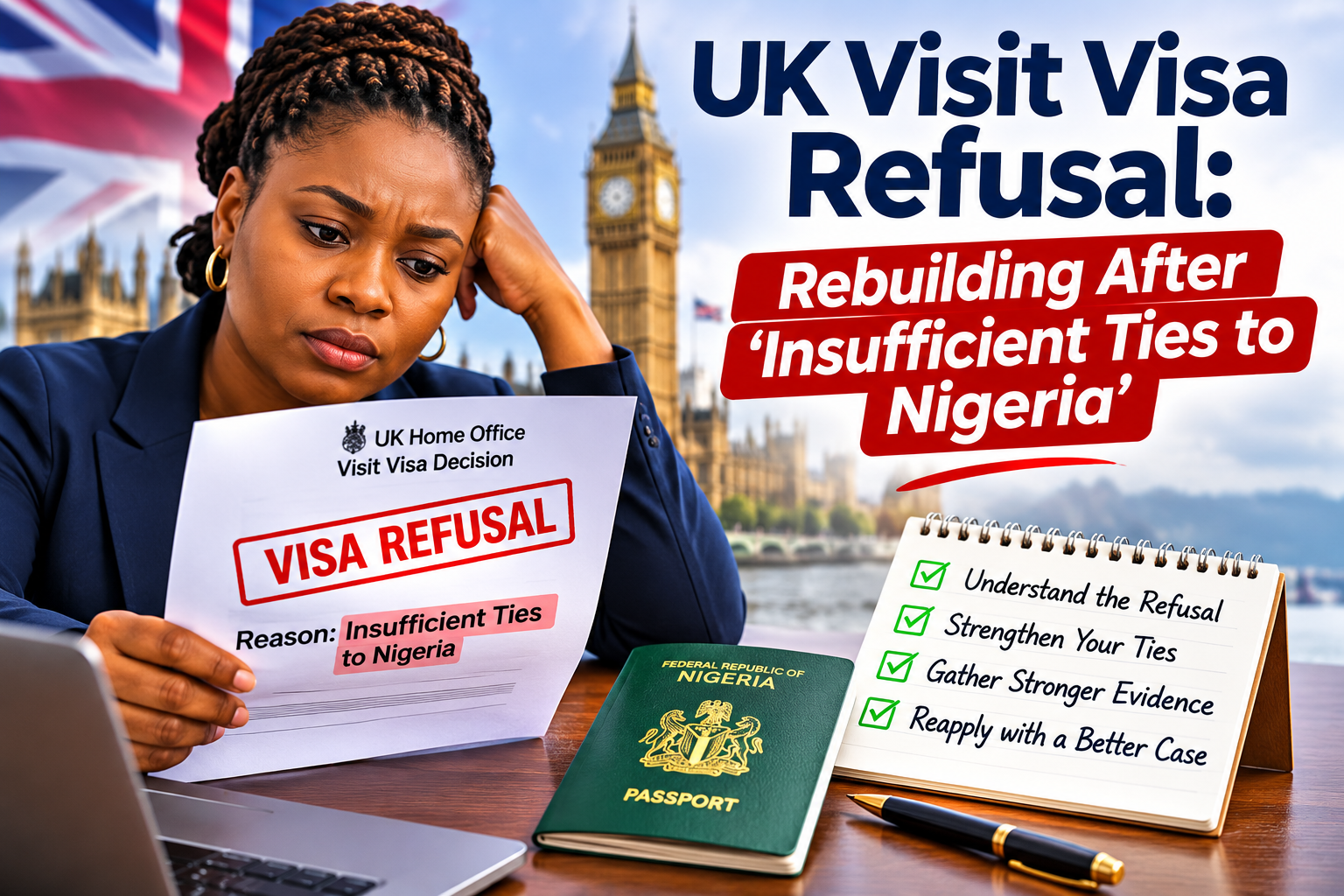
UK Visit Visa Refusal: Rebuilding After 'Insufficient Ties to Nigeria'
Refused a UK visit visa because the officer wasn't convinced you would return to Nigeria? Here's what that decision really means and how to build a stronger case.
What Does "Insufficient Evidence of Return" Actually Mean?
When a UK Entry Clearance Officer — the official who decides your visa application — writes that you have not provided sufficient evidence of your ties to Nigeria, they are saying one specific thing: they were not convinced that you would leave the UK at the end of your visit. This is not a judgement of your character. It is a documentation problem, and documentation problems can be fixed.
The Immigration Rules require every visit visa applicant to show they are a "genuine visitor" — someone who intends to come to the UK for a temporary purpose and will leave when that purpose is complete. Proving your intention to return home is one of the most important parts of that test.
Why Nigerian Applicants Often Receive This Refusal
This refusal reason is common for applicants from many countries, and Nigeria is no exception. officer's look at every application against a broad picture: your personal circumstances, your economic situation, and what you have presented in your documents. If the picture looks incomplete, the assumption of genuine intent can be difficult to establish.
Common reasons the officer may not be satisfied include:
- Employment letters that are vague or do not confirm approved leave and a return date
- Bank statements that show large, recent deposits with no clear explanation of their source
- No evidence of property ownership, dependants, or long-term responsibilities in Nigeria
- A purpose of visit that seems loosely defined — for example, "tourism" with no itinerary or contacts in the UK
- Previous long stays or overstays in any country
- Being at a life stage where relocation might appear attractive, such as recent graduation with no settled employment
None of these things automatically leads to a refusal, but any of them left unexplained can contribute to one.
Read Your Refusal Letter Carefully
Your refusal notice will list the specific paragraphs of the Immigration Rules the officer relied on. Do not set this letter aside. It is the most valuable document you have for your next application because it tells you precisely what the officer found unconvincing. If the language is technical or hard to interpret, that is worth resolving before you reapply.
What "Ties to Nigeria" Actually Covers
The phrase "ties to your home country" refers to the reasons a person has to return. The stronger and more varied those reasons are, the more credible your case becomes. Ties can be:
- Economic ties: Employment with a reputable employer, an ongoing business, a professional practice, or significant financial assets in Nigeria
- Family ties: A spouse, children, ageing parents, or other dependants who rely on your presence or income
- Property ties: Ownership of a home, land, or business premises in Nigeria
- Social ties: Long-term commitments such as professional memberships, community roles, or ongoing study
You do not need every category. What you need is honest, well-evidenced, and consistent documentation of whichever ties you genuinely have.
How to Strengthen Your Next Application
1. Address the Refusal Reason Directly
Do not simply resubmit the same documents. The officer will see that you have applied again, and presenting identical evidence gives them no reason to reach a different conclusion. Your new application must show what was missing before.
2. Upgrade Your Employment Evidence
If you are employed, your employer's letter should confirm your job title, your salary, how long you have worked there, that your leave has been approved, and your expected date of return to work. A generic letter saying "we confirm employment" is rarely enough. If you are self-employed or run a business, include registration documents, contracts, and financial records that demonstrate ongoing activity.
3. Explain Your Bank Statements
Large, unexplained deposits are a red flag. If money was moved into your account before the application — perhaps from family contributions or business income received in a lump sum — explain this clearly in your personal statement and provide supporting evidence for the source. Consistent, regular income over several months is generally more persuasive than a high balance with no history.
4. Write a Clear and Honest Personal Statement
Some applicants do not include a personal statement at all, or submit one that simply restates what the form already says. A good personal statement explains your purpose of travel in specific terms, describes your ties to Nigeria, acknowledges anything in your profile that might raise a question, and addresses it honestly. It should read as a coherent narrative, not a list of assertions.
5. Add Supporting Evidence for Your Purpose of Visit
If you are visiting friends or family in the UK, include an invitation letter and evidence that your host has status in the UK. If you are attending an event, include the registration or invitation. If you are travelling for leisure, a rough itinerary with accommodation bookings helps demonstrate that your plans are real and time-limited.
6. Reapply When Your Circumstances Have Genuinely Changed
If you recently started a new job or business, waiting until you have a longer track record can materially improve your application. There is no mandatory waiting period after a UK visit visa refusal, but reapplying before your circumstances have genuinely changed rarely produces a different result.
What You Should Not Do
Never alter or embellish any document. Never ask anyone to write a letter that does not reflect the true position. Never attempt to explain away a genuine inconsistency with a false one. UK Visas and Immigration (UKVI) has the authority to refuse future applications, impose bans, and in serious cases refer matters for prosecution. Honesty is not just an ethical requirement — it is a practical one.
How Zenvytra Can Help
Zenvytra's refusal letter explanation breaks down the reasons stated in your letter,in plain language. If you want to know whether your current circumstances are likely to meet the requirements before you spend time and money reapplying, an eligibility check can give you a realistic picture. When your documents are ready, a pre-submission check reviews the full package for gaps, inconsistencies, or unclear evidence before you submit. And if you need help drafting your personal statement or any supporting documents, Zenvytra's supporting document drafts service can help you present your genuine circumstances clearly and credibly.
Zenvytra does not provide legal advice and cannot predict the outcome of any application.
Always check current visa requirements, fees, and guidance on the official UK government website at gov.uk/browse/visas-immigration.
Ready to organise your next preparation step?
Bring your application details, documents and next actions together in a workspace built for Nigerian applicants.
Create your accountMore from the blog

18 November 2026
How to Write a Visa Cover Letter That Officers Can Trust
A good cover letter ties your documents together and answers the officer's questions before they ask them. Here's how Nigerian applicants can write one, whatever country they're applying to.

18 November 2026
Netherlands MVV: Legalising Your Nigerian Documents
Applying for a Dutch MVV from Nigeria? Here's how to get your documents legalised by the Ministry of Foreign Affairs, which documents need it, and the mistakes to avoid.

6 May 2026
The Innovator Founder Endorsement Process: A Structural Guide
Navigating the Innovator Founder endorsement process requires precision at every stage. This structural guide breaks down the key requirements, common pitfalls, and best practice for practitioners.