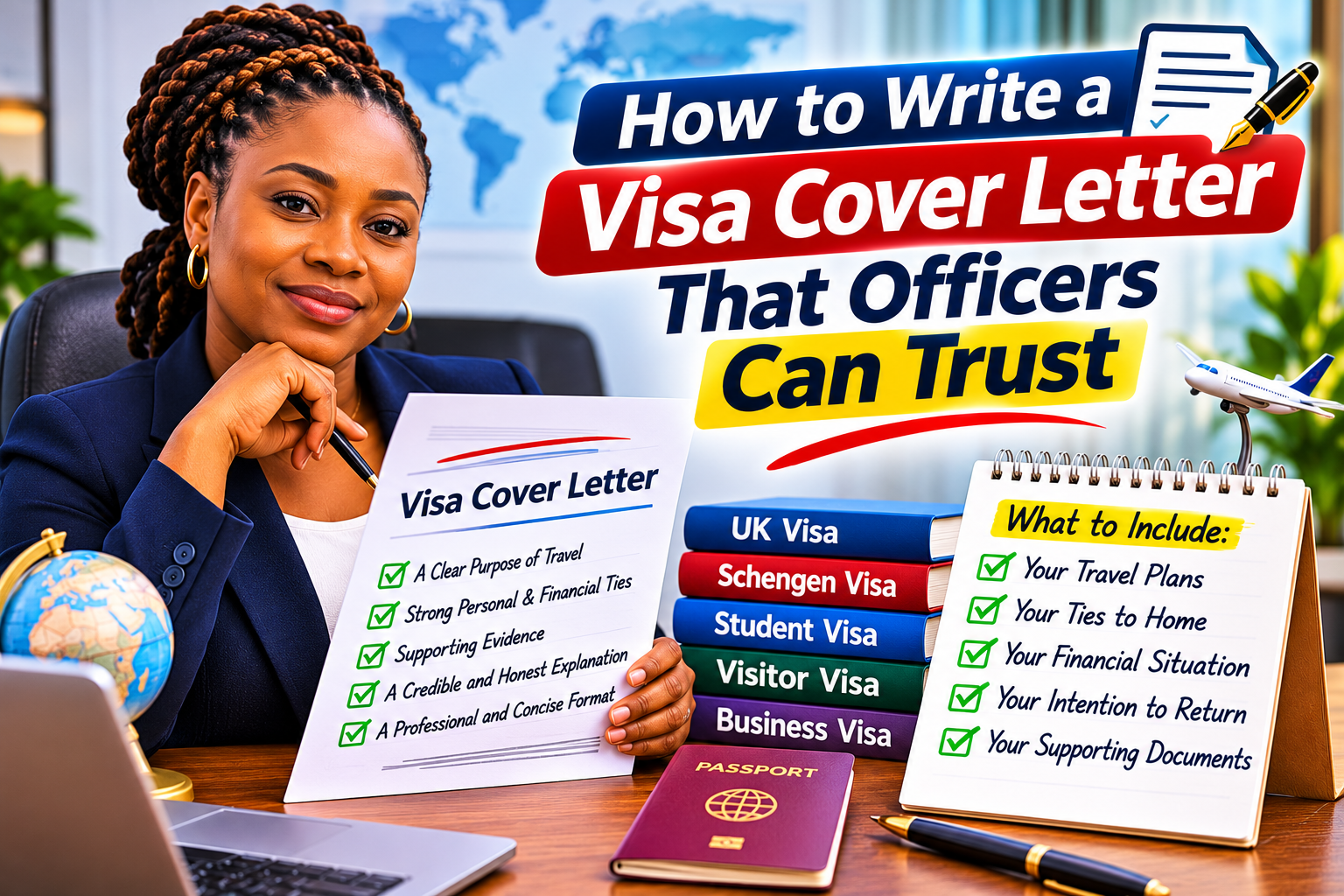
How to Write a Visa Cover Letter That Officers Can Trust
A good cover letter ties your documents together and answers the officer's questions before they ask them. Here's how Nigerian applicants can write one, whatever country they're applying to.
What a Cover Letter Is For
A visa cover letter is a short letter from you to the visa officer that explains your application in your own words. It is not a form and it is not a speech. Its job is to tie your documents together, so the officer can see quickly who you are, why you are travelling and how your evidence supports what you say.
Not every country asks for one, but most officers will read it if you include it. A clear letter can answer questions before they become reasons for refusal. A vague or exaggerated one can raise doubts that were not there before.
What the Officer Wants to Know
Whatever the destination, a visa officer is usually asking the same questions:
- Why are you travelling? The purpose should be specific and match the visa you are applying for.
- Can you pay for it? Your funds should cover the trip, and their source should be clear.
- Will you follow the rules of your visa? For visits and study, this usually means showing your reasons to return to Nigeria.
- Does everything add up? Your letter, form and documents should tell the same story.
A good cover letter answers each of these in plain language and points to the document that proves it.
A Simple Structure That Works
- Your details and the visa you are applying for. Your full name as it appears in your passport, your passport number, and the exact visa type.
- The purpose of your trip. What you will do, where, and for how long. Give dates.
- Who is paying. If you are paying, say so and refer to your bank statements and income. If someone else is paying, name them, explain your relationship and refer to their evidence.
- Your life in Nigeria. Your job, business, studies or family responsibilities, and what you are returning to. Refer to your employer letter or business documents.
- Anything that needs explaining. A large deposit, a gap in employment or a previous refusal. Address it honestly and briefly.
- A list of the documents you have enclosed. This helps the officer find your evidence.
- Your signature and date.
Most good cover letters fit on one or two pages. If yours is much longer, you are probably repeating your documents rather than explaining them.
Writing Tips
- Be specific. "I will attend my sister's wedding in Manchester on 14 June and return on 28 June" is stronger than "I want to visit family".
- Refer to your evidence. Each claim should point to a document: "as shown in my employer's letter", "see my bank statements for March to August".
- Explain, do not plead. Officers decide on evidence. Emotional appeals and promises to "obey all laws" add nothing.
- Keep the tone plain and polite. Write as you would to a professional you respect.
- Write it yourself, or make sure it sounds like you. A letter full of words you would not use can make an officer wonder who prepared your application.
Common Mistakes
- Copying a template word for word. Officers see the same templates many times. Your letter should describe your situation, not someone else's.
- Details that do not match your form. Dates, employer names, salaries and addresses must be identical across your letter, form and documents.
- Hiding a previous refusal. If the form asks about refusals, declare them. In your letter, briefly explain what has changed since.
- Overstating your ties or income. Never claim anything your documents cannot show. Exaggeration found out is far more damaging than a modest but honest application.
- Leaving out the obvious question. If something in your documents will clearly raise a question, such as a recent large deposit, answer it in the letter instead of hoping it goes unnoticed.
When Someone Else Is Sponsoring You
If a parent, spouse, relative or employer is paying for your trip, your sponsor should usually write their own short letter. It should confirm who they are, their relationship to you, what they will pay for, and refer to their own bank statements and income evidence. Your letter and theirs should describe the same plan.
Check the Requirements for Your Destination
Each country has its own checklist, and some ask for specific letters, such as an invitation letter from your host or a letter from your employer approving your leave. Always check the official checklist for your visa type before you write, so your cover letter refers to the documents that destination actually asks for.
How Zenvytra Can Help
- Free route checklist: see the documents your destination asks for, so your letter refers to the right evidence.
- Supporting document drafts: get a draft cover letter based on your own details, then review and adapt it so it reflects your circumstances in your own words.
- Pre-submission check: once your letter and documents are ready, find gaps and inconsistencies before you submit.
- Refusal letter explanation: if you were refused before, understand the reasons stated in the letter so your cover letter can address them.
Zenvytra does not provide legal advice and cannot predict the outcome of any application.
Always check current requirements on the official government website for the country you are applying to before you submit.
Ready to organise your next preparation step?
Bring your application details, documents and next actions together in a workspace built for Nigerian applicants.
Create your accountMore from the blog
18 November 2026
UK Visit Visa Refusal: Rebuilding After 'Insufficient Ties to Nigeria'
Refused a UK visit visa because the officer wasn't convinced you would return to Nigeria? Here's what that decision really means and how to build a stronger case.
18 November 2026
Netherlands MVV: Legalising Your Nigerian Documents
Applying for a Dutch MVV from Nigeria? Here's how to get your documents legalised by the Ministry of Foreign Affairs, which documents need it, and the mistakes to avoid.

6 May 2026
The Innovator Founder Endorsement Process: A Structural Guide
Navigating the Innovator Founder endorsement process requires precision at every stage. This structural guide breaks down the key requirements, common pitfalls, and best practice for practitioners.